Small Entryway Organization Ideas for Renters (No Drilling)
You can organize a small rental entryway entirely with freestanding pieces — a slim shoe rack, a freestanding coat rack or over-the-door hooks, and a small tray for keys and mail — with no drilling and nothing that risks your deposit. The habit that keeps it working is giving every category (shoes, coats, mail) one specific spot the moment you start.
A small entryway has to do a lot of work in very little space — shoes, coats, bags, mail, and whatever the day handed you, all landing in the first three feet past your front door. Most entryway advice assumes you can mount shelving or hang a row of hooks straight into the wall. If you’re renting, that’s often not an option, and it can feel like the “easy fix” everyone recommends just isn’t available to you.
Here’s a full setup that uses only freestanding and removable pieces — nothing that needs a drill, and nothing you can’t take with you when you move.
The 3 Things Competing for Space in Every Entryway
Almost every entryway problem comes down to three categories fighting for the same small footprint: things you wear (shoes, coats, bags), things you’re holding onto temporarily (mail, packages, keys), and things that don’t belong there at all but end up there anyway. Solve the first two on purpose, and the third mostly stops happening.
My front door opens straight into a narrow corridor — maybe three feet wide. For the longest time, shoes piled up right where they dropped, coats lived on a dining chair four steps away, and the one small table became a dumping ground for keys, junk mail, and my son’s school notices. It was the first thing we saw coming home and the last thing we saw leaving, and it set a chaotic tone for the rest of the house.
A Renter-Friendly Setup That Needs Zero Drilling
1. A slim, freestanding shoe rack
A narrow vertical rack takes a fraction of the floor space of shoes left in a pile, and it makes “where do my shoes go” a non-decision. Look for one sized to your actual entryway width, not the biggest one available.
2. A freestanding coat rack or an over-the-door hook strip
If there’s no wall space to spare, a standing coat rack solves the same problem a wall-mounted row of hooks would — just without the drilling. If your entry has a door, an over-the-door hook strip is even more compact.
3. A small catch-all tray for keys, mail, and pocket items
This is the single highest-impact item on this list. Without one specific spot for keys and mail, they default to whatever surface is closest — which is usually the thing that makes an entryway look cluttered even when it technically isn’t.
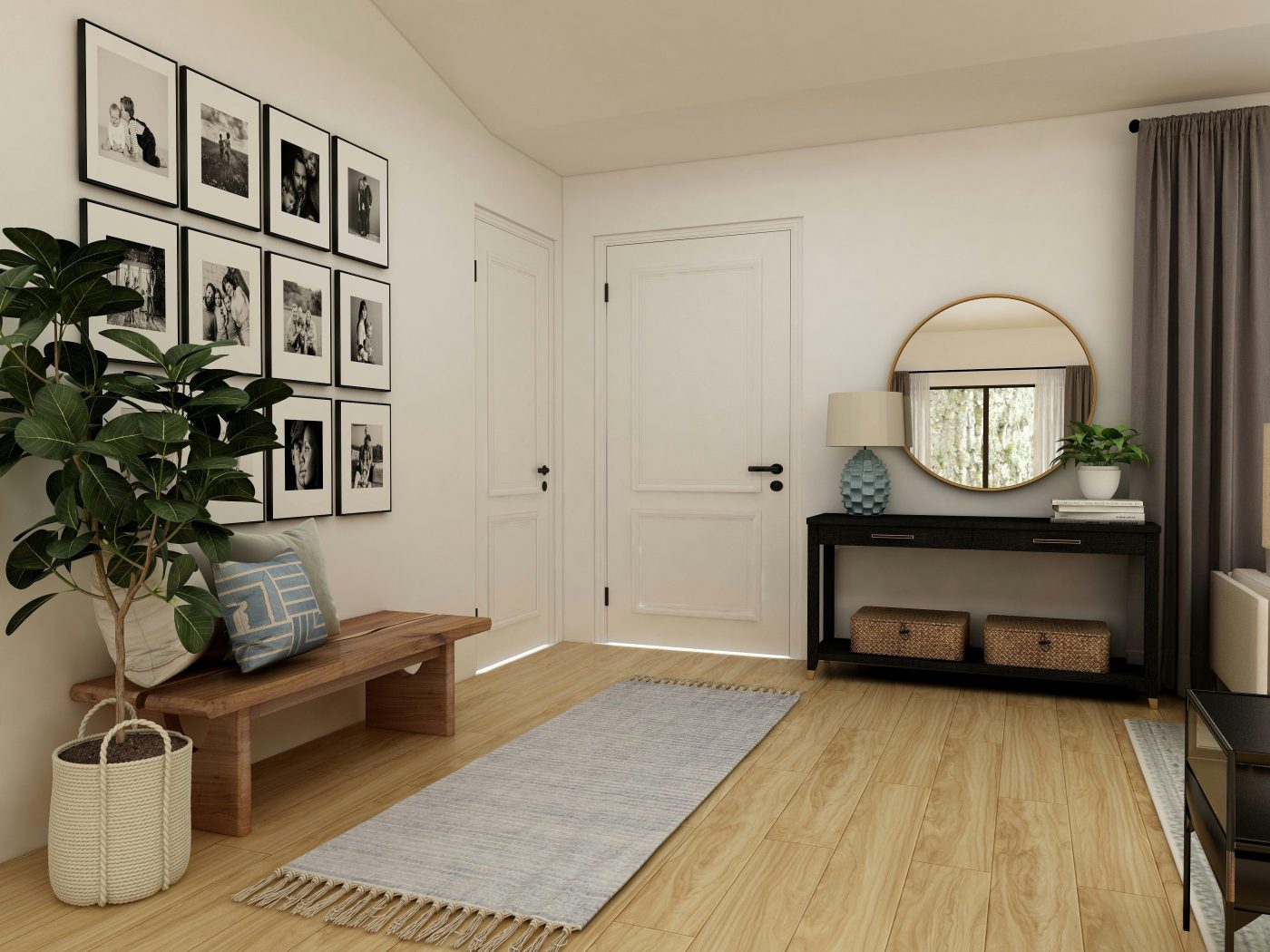
4. A slim console table or wall-leaning shelf (freestanding, not mounted)
If there’s room, a narrow freestanding table gives the tray, a small lamp, and anything else a defined surface — versus the floor, which has no defined edges and therefore never looks “done.”
Hands down, the catch-all tray. I found a simple wooden tray and placed it on the tiny wall-leaning shelf I already had. Suddenly keys had a home, my wallet had a home, and the junk mail that used to scatter across the table stayed corralled. It took less than a day for my family to start using it without being reminded, because the spot was obvious and exactly where hands naturally dropped things.
The Habit That Actually Keeps It Working
A setup only works if it’s paired with the one-touch rule: whatever comes through the door goes straight to its assigned spot in the same motion, not “set down for now.” An entryway with a perfect setup and no habit behind it will look like the photos for about a week.
“My entryway is also where the dog’s leash, the kids’ backpacks, and outgoing mail live” — mixed-use entries
If your entry has to hold more than coats and shoes, the fix is the same one that works for a pantry that doubles as a closet: give every category an explicit zone, even a small one, rather than letting them share one undefined pile. A basket for backpacks, a hook for the leash, a small slot for outgoing mail — defined, not improvised.
Quick-Start Checklist
- ☐ Measure your actual entryway width before buying anything
- ☐ Start with the catch-all tray — it has the fastest visible impact
- ☐ Add the shoe rack and coat solution based on what you actually have most of (more shoes vs. more coats)
- ☐ Apply the one-touch rule from day one, not after the setup “settles”
Want the Printable Version?
Grab the free 5-Minute Reset Kit — it includes a printable daily reset checklist that works for entryways too.
A Few Things That Make a Small Entryway Easier
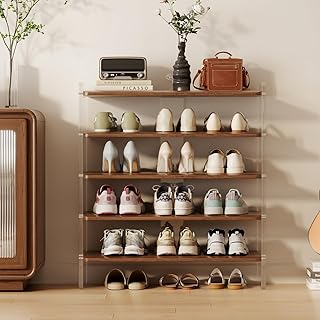
Uses vertical space instead of floor space — sized for narrow entryways specifically.
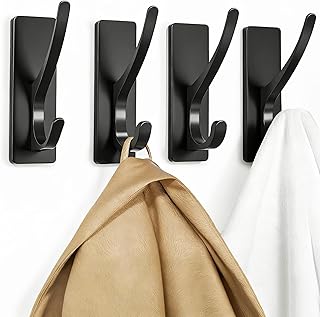
Adds hanging storage using the door itself — no drilling, fully removable when you move.

Gives keys and mail one specific home — the single highest-impact piece in this whole setup.
I’ve been using that over‑the‑door hook strip for about eight months now, and it hasn’t budged. My son hangs his backpack on it every day after school, and it’s taken the place of the dining chair that used to live permanently in the hallway. It was the simplest fix with the biggest impact.
Frequently Asked Questions
Related Reading