Small Bathroom Counter Organization: A Renter-Friendly System That Actually Works
This post contains affiliate links. If you purchase through one of these links, The Organized Calm earns a small commission at no extra cost to you. We only recommend products we’d genuinely use ourselves. Full disclosure policy here.
Quick Answer
The fastest way to organize a small bathroom counter without permanent changes: clear everything off, sort into “daily,” “weekly,” and “rarely,” corral daily items in one shallow tray or caddy, move everything else into drawers or a cabinet with dividers, and commit to a 90-second nightly reset. No drilling required — the system lives in trays, drawers, and one repeatable habit, not in your walls.
Small Bathroom Counter Organization: A Renter-Friendly System That Actually Works
If your bathroom counter has quietly become a landing zone for every bottle, tube, and half-used sample you own, you are not alone — and you don’t need a renovation to fix it. Most bathroom organization content assumes you can drill into tile, replace the vanity, or add built-ins. If you’re renting, that’s not just impractical, it’s often against your lease.
This guide is built for the reality most of us actually live in: a small counter, a cabinet that came with the unit, and zero interest in losing a security deposit over a shelf. What follows is a system — not a photo shoot — designed to survive real mornings, not just look good for one.
Why Bathroom Counters Get Cluttered So Fast
A bathroom counter is one of the smallest surfaces in your home, but it holds one of the highest concentrations of daily-use items — skincare, haircare, oral care, medications, and whatever you set down “just for a second” that never left. Unlike a kitchen counter, there’s rarely a cabinet directly above it for overflow, and in rentals, the storage you do get is often a single shallow drawer or a mirror cabinet barely big enough for toothpaste.
The result isn’t a discipline problem. It’s a systems problem — there’s no home for most of what lands there, so it just stays put.
Expert Tip
Before buying a single organizer, do a 3-day audit: don’t move anything, just notice what you actually reach for each morning and night. That short list is your “daily” tier — everything else can move off the counter entirely.
The 4-Step Renter-Friendly System
Step 1: The Full Clear-Out
Remove everything from the counter and the cabinet beneath or around it. Wipe every surface down — you’ll likely find a layer of dust and product residue you haven’t seen in months. This is also when you’ll spot the expired sunscreen and the sample-size lotion from a hotel two years ago.
Step 2: Sort Into Three Tiers
- Daily: Toothbrush, toothpaste, face wash, moisturizer — items used every single day
- Weekly: Hair tools, exfoliants, nail care, styling products
- Rarely: Backup supplies, seasonal items, first-aid, medications
Step 3: Give Each Tier a Home
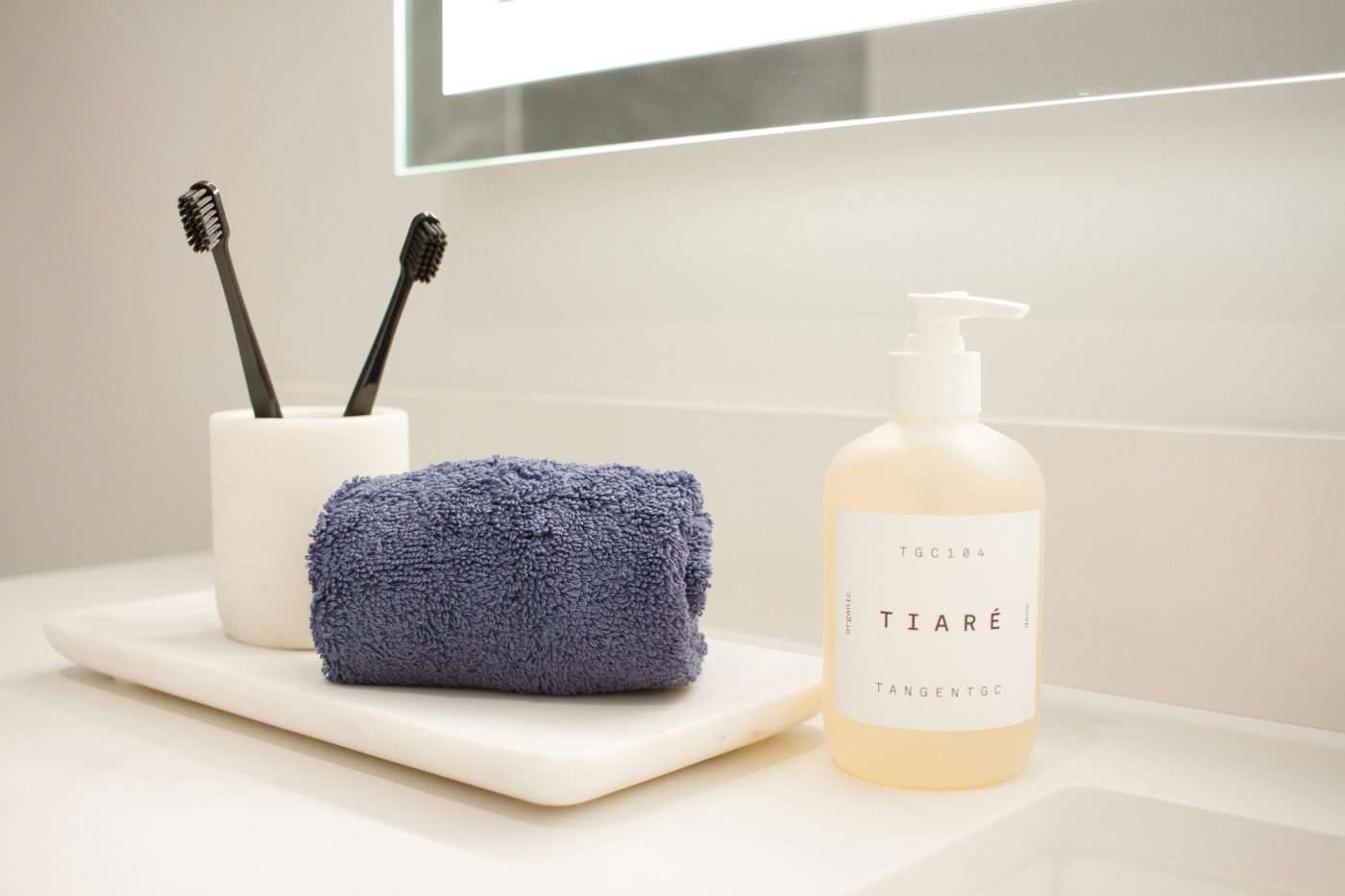
Daily items are the only ones that earn counter space, and even then, they belong in a tray or caddy — never loose. A tray does two things a bare counter can’t: it defines a boundary (nothing sits outside it) and makes cleaning a 5-second lift-and-wipe instead of moving eight bottles one at a time.
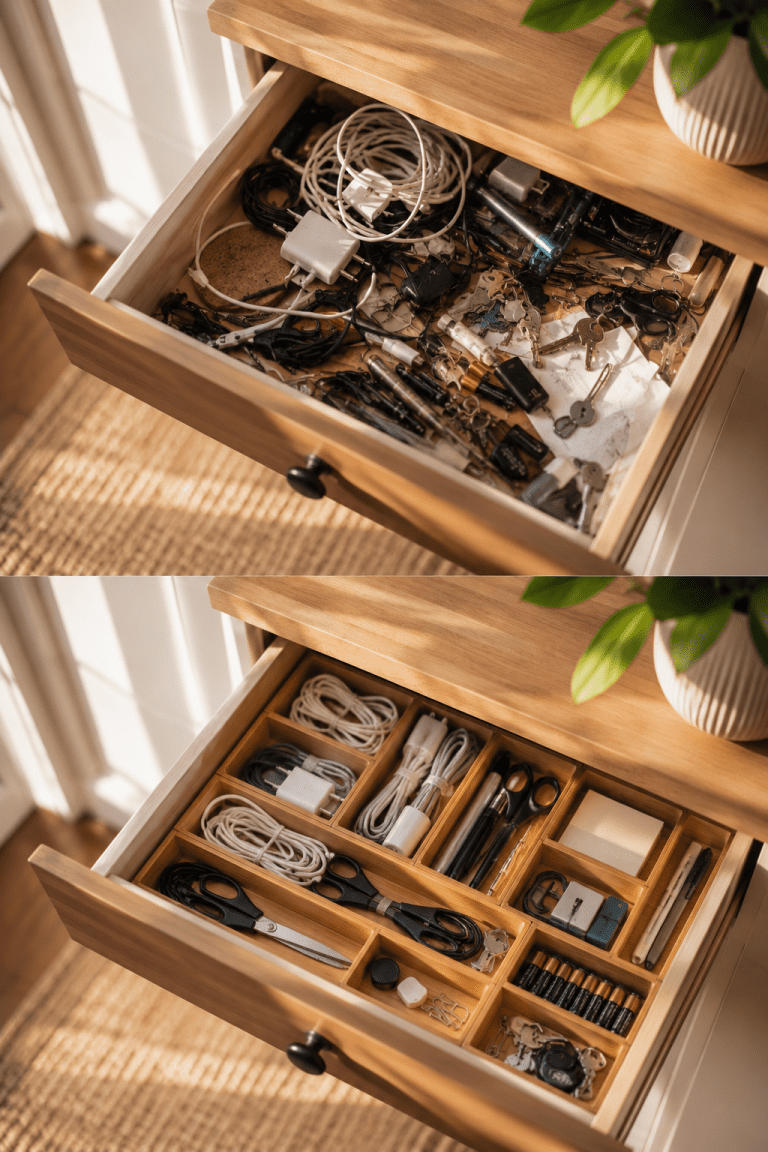
Weekly items move into a drawer with dividers or a small stackable bin inside the cabinet. Rarely-used items go into a labeled bin on the highest or lowest shelf — the “expensive real estate” of eye-level storage is reserved for daily items only.
Step 4: The 90-Second Nightly Reset
This is the step that actually makes the system last. Before bed, everything that migrated out of its tier goes back. It takes under two minutes and prevents the slow drift back into clutter that undoes every “big organizing day” within three weeks.
Common Mistake
Buying organizers before sorting. It’s tempting to order a matching set of acrylic bins the moment you decide to get organized, but if you buy before you know your actual daily-item count, you’ll end up with containers that are the wrong size for your real life — and more clutter to store the containers you’re not using.
Renter-Friendly Storage Solutions (No Drilling Required)
| Solution | Best For | Reversible? |
|---|---|---|
| Shallow vanity tray | Daily-use items on the counter | Yes — just lift and move |
| Tension rod under sink | Hanging spray bottles below the sink | Yes — no hardware |
| Command hooks (rated for weight) | Hair tools, robes, small baskets | Yes — designed for rental removal |
| Drawer dividers | Sorting small daily items in existing drawers | Yes — fully removable |
| Over-the-cabinet-door organizer | Hair tools, cleaning supplies | Yes — hooks over standard doors |
| Stackable bins (no adhesive) | Under-sink or cabinet storage | Yes |
Product Recommendations
Bamboo Vanity Tray
Check current price on Amazon
Who it’s for: Anyone who wants their daily items visible but contained.
Pros: Easy to wipe clean, natural material fits most bathroom palettes, no assembly.
Cons: Bamboo needs occasional drying to avoid water rings if left wet.
When not to buy: If your daily-item count is high (6+ bottles), size up before purchasing — a too-small tray just becomes a new clutter zone.
Clear Stackable Drawer Organizers
Check current price on Amazon
Who it’s for: Shallow rental bathroom drawers that need real subdivision.
Pros: No adhesive, adjustable configurations, works in most standard drawer depths.
Cons: Measure your drawer depth first — some styles are too tall for shallow rental drawers.
When not to buy: If your drawer is under 2 inches deep, a flat tray-style organizer will fit better than a stackable one.
Command Damage-Free Hooks (Bathroom-Rated)
Check current price on Amazon
Who it’s for: Renters who need vertical storage without wall damage.
Pros: Explicitly designed for clean removal, moisture-resistant versions available.
Cons: Weight limits are real — check the rating before hanging anything heavy.
When not to buy: On textured or freshly painted walls — test a hidden spot first, or the adhesive may pull paint on removal.
Maintaining the System
The system fails the same way every organizing project fails: not from lack of effort on day one, but from lack of a habit on day twenty. The nightly reset is non-negotiable — everything else is optional polish. If you only adopt one part of this guide, make it that one.
Quick Win
Keep an empty basket under the sink labeled “doesn’t live here.” Anything you find on the counter that belongs elsewhere in the house goes straight into it, and you empty it once a week. This stops the counter from absorbing clutter from other rooms.
Mistakes to Avoid
Frequently Asked Questions
How do I organize a bathroom counter with no storage at all?
Start with a single tray for daily items and an over-the-cabinet-door organizer or tension-rod system for everything else. You don’t need built-in storage to have a functional system — you need a defined home for each tier of items, even if that home is a hanging organizer rather than a cabinet.
What’s the best way to organize bathroom counters for renters?
Stick to non-adhesive or removable solutions: trays, tension rods, drawer dividers, and rental-rated Command hooks. Avoid anything requiring drilling or permanent adhesive, and always patch-test hooks on a hidden section of wall before committing to a full install.
How often should I declutter my bathroom counter?
A full sort-through every 3–4 months catches expired products and outgrown routines. The nightly 90-second reset handles day-to-day maintenance in between, so the quarterly declutter stays quick instead of becoming another big project.
Do I need matching organizers for it to look put-together?
No — function matters more than a matched set. A tray that fits your actual daily-item count in a material you like is enough. Matching sets are a nice-to-have once the system is working, not a requirement to get started.
Where should I store medications on a small bathroom counter?
Medications are best kept off the counter entirely, in a drawer or cabinet away from steam and humidity, which can degrade some medications faster than a climate-controlled space. A small labeled bin inside a cabinet works well for this tier.