The Complete Guide to Kitchen Storage Without a Pantry
The Complete Guide to Kitchen Storage Without a Pantry
If you’ve ever stood in your kitchen holding a bag of rice with nowhere obvious to put it, you already know the problem this guide solves. Most kitchen organizing advice assumes you have a pantry — even a small one — that just needs better bins. But if you genuinely don’t have a dedicated food storage space at all, that advice doesn’t apply to you. This guide is for the kitchens that skipped the pantry entirely.
This is the anchor guide for our entire No-Pantry Kitchen Storage series. Below, you’ll get the full framework — the four-zone system, how to adapt it to your specific situation, what to buy (and what to skip), and links to deep-dive guides on every part of the process.
What’s in This Guide
Why “No Pantry” Isn’t the Same as “Small Pantry”
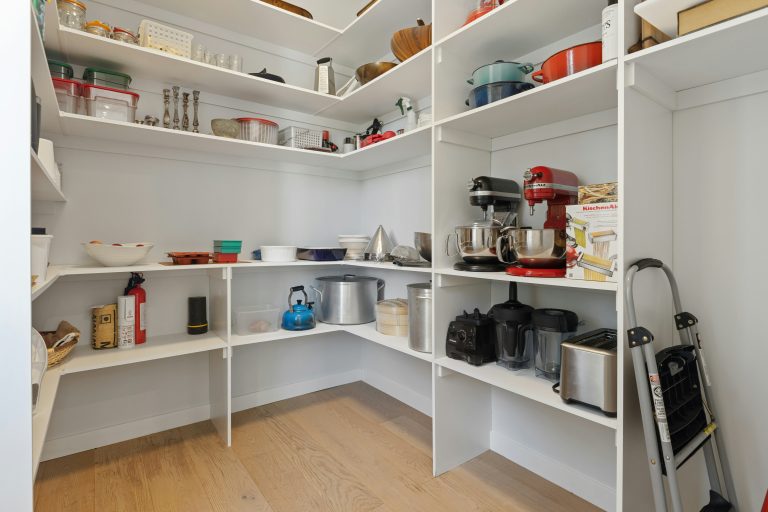
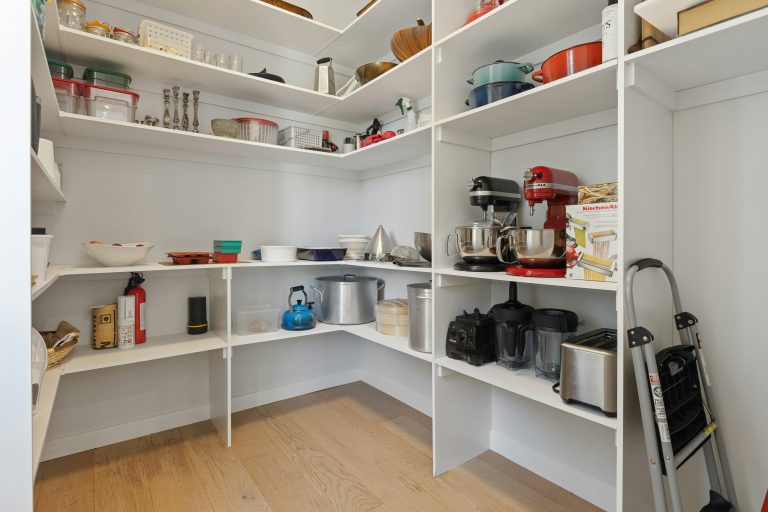
If you have a small pantry, the fix is usually about maximizing a space that’s already dedicated to food — shelf risers, door racks, better bins. If you have no pantry at all, you’re solving something different: you have to decide, on purpose, which parts of your kitchen are going to act like a pantry, because right now nothing is.
That distinction changes where you start. You’re not optimizing an existing space. You’re designating one from scratch — and that means the first step isn’t buying anything. It’s deciding.
If it turns out you do have a small dedicated food space and just need to use it better, our Small Pantry Organization Ideas guide is the better starting point than this one.
The Zone System
This is the core framework behind every guide in this series. It has four zones. Most kitchens only need two or three — walk through them in order and stop once you have enough space to hold a realistic week of groceries.
Zone 1: The Cabinet You’re Already Wasting
Almost every kitchen has one cabinet that’s harder to use than the rest — a deep corner cabinet, an awkward under-counter space, a high cabinet nobody reaches for daily items. That cabinet becomes your pantry zone. Add a shelf riser to use its vertical space, group items by category in pull-out bins, and if it’s a deep corner cabinet, a turntable solves the “I forgot that was back there” problem almost completely.
Zone 2: Vertical Space You’re Not Using
Walls and the backs of doors are the most underused storage in a rental kitchen, mostly because people assume “no drilling” means “no options.” Over-the-door racks, adhesive hooks, and the gap above your cabinets can all hold real backup storage without a single hole in the wall.
Zone 3: One Freestanding Piece (Optional)
If Zones 1 and 2 aren’t enough, a slim freestanding cart or narrow cabinet can genuinely function as a stand-in pantry — but only if you have a spare corner or stretch of wall. Not every kitchen does, and that’s fine. This zone is optional, not required.
Zone 4: The Counter — Used Carefully
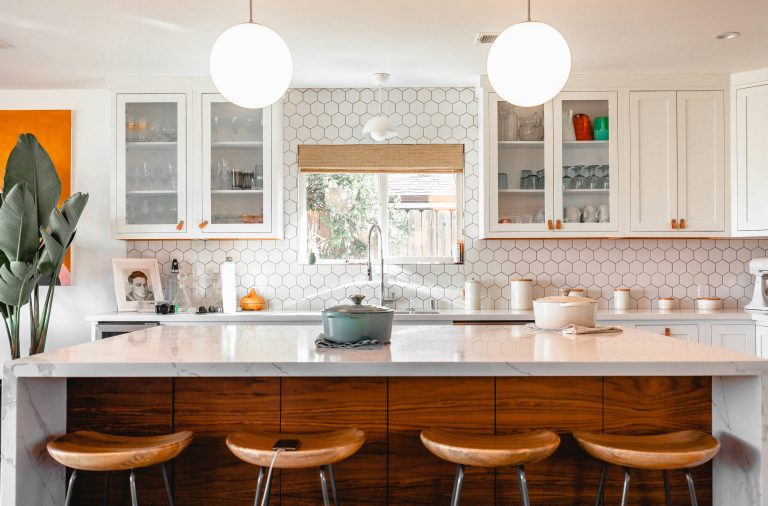
This zone is about visibility, not volume. Decanting three or four high-use staples — flour, sugar, coffee, pasta — into matching clear containers makes food easier to find and often takes up less space than the packaging it came in.
Renters vs. Owners
Most of the strategies in this guide are written with renters in mind, because the constraints are stricter: no drilling, nothing permanent, everything reversible. If you own your home, you have more flexibility — you could add real shelving inside a closet, install permanent hooks, or even convert a small closet into a proper pantry. But everything built for renters in this series works just as well for owners; it’s simply the more cautious version of the same system.
If you’re renting, adhesive weight ratings matter more than people think. Most “my hook fell off the wall” stories are actually a case of hanging something heavier than the hook was rated for — not a hook failure.
Small Kitchens vs. Larger Ones With No Pantry
A galley kitchen with no pantry and a larger kitchen with no pantry are solving the same core problem with very different amounts of room to work with.
In a small or galley kitchen, you likely only have room for Zones 1, 2, and 4. Skip Zone 3 unless you have a genuine spare corner — trying to force a cart into a kitchen with no floor space to spare usually creates a new obstacle instead of solving storage.
In a larger kitchen with no pantry (this happens more often than you’d think — plenty of bigger apartments and older homes were simply never built with one), you likely have room for all four zones, and a full-size freestanding pantry cabinet becomes a realistic option rather than a squeeze.
Budget Tiers: Free, Under $50, Under $150
Free: Reorganize what you already own. Group like items together in your designated cabinet, use a spare basket or box you already have for the top-of-cabinet zone, and clear counter space by consolidating duplicate condiments and half-used bags into what you already have on hand.
Under $50: A shelf riser, a turntable, and a set of adhesive hooks will solve most of Zones 1 and 2 for most kitchens.
Under $150: Add a slim rolling cart or a small set of matching decanting containers on top of the above. This tier is where the system starts to look — and function — like an actual pantry.
Common Mistakes and Myths
Buying storage before deciding on zones. Walk your kitchen and pick your zones first. You’ll buy less, and what you buy will actually fit.
Decanting everything at once. This is a common way to abandon the system by week three. Start with four or five items you use constantly, and expand only if it’s still working a month in.
Ignoring the “hard to reach” cabinets. The awkward corner cabinet and the too-high shelf are usually the most wasted space in a small kitchen, precisely because they’re annoying to use. A turntable or a nearby step stool solves this faster than buying more storage elsewhere.
The myth that “no pantry” means “no real storage.” It doesn’t. It means your storage needs a system more than most kitchens do — not that you’re stuck.
Product Recommendations
Stackable Cabinet Shelf Riser
Doubles usable space inside a deep or tall cabinet by creating a second tier.
Best for: Turning Zone 1 into real, visible storage.
Not for you if: Your cabinets are already shallow.
Corner Cabinet Turntable (Lazy Susan)
A rotating tray that eliminates the “I forgot that was back there” problem in deep or corner cabinets.
Best for: Deep corner cabinets where items get lost toward the back.
Not for you if: Your cabinet is narrow rather than deep.
Slim Rolling Kitchen Cart
A narrow, wheeled cart that can act as a stand-in pantry in a corner or end of counter.
Best for: Kitchens with a spare foot or two of floor space.
Not for you if: Your kitchen is a true galley with no floor to spare.
Adhesive Over-the-Door Storage Rack
A no-drill rack for canned goods, snacks, or spice jars.
Best for: Renters who want backup storage with zero wall damage.
Not for you if: Your only nearby door is shared with a hallway — check your lease first.
Matching Clear Pantry Containers (Small Set)
Airtight, stackable containers for decanting your most-used staples.
Best for: Zone 4 — visible counter storage for flour, sugar, coffee, or pasta.
Not for you if: You’re hoping to decant everything at once — start smaller.
The Full No-Pantry Series
Each guide below goes deep on one part of the system above. This pillar page will be updated with live links as each piece publishes.
The full walkthrough of the Zone System — start here if you’re new to this series.
A buying guide for freestanding pantry cabinets, sized for real apartment gaps.
A deep dive on Zone 1 for kitchens where the corner cabinet is the only real option.
How to decant without over-committing — and which containers actually hold up.
A full Zone 2 deep dive: doors, walls, and the space above your cabinets.
Sizing, depth, and mobility considerations for Zone 3.
What to do when a warehouse-store trip meets a kitchen with nowhere to put it.
Applying the Zone System to a full week of real meal planning.
Every no-drill door storage option, compared.
A real-budget case study applying every tier from the Budget Tiers section above.
Frequently Asked Questions
What do I do if my apartment has no pantry?
Designate one deep or awkward cabinet as your pantry zone, add vertical storage on walls or doors, and decant your most-used staples into clear containers so everything stays visible. You’re not missing a pantry — you’re missing a system, and that’s fixable without construction.
Where do you put food if you don’t have a pantry?
Spread it across a few intentional zones instead of one room: a designated cabinet for shelf-stable basics, over-door or wall storage for backup items, and a small freestanding cart if you have extra floor space.
Can you add a pantry to a small kitchen if you’re renting?
You usually can’t add a physical room, but a freestanding pantry cabinet or slim rolling cart can functionally replace one, and it moves with you when your lease ends.
How do I organize a kitchen with barely any cabinets?
Prioritize vertical space first, since the backs of doors and tops of cabinets are usually untouched, then decant a handful of daily staples so limited shelf space isn’t taken up by bulky boxes.
What’s the difference between organizing a small pantry and having no pantry at all?
A small pantry just needs better use of existing dedicated space. No pantry means you have to designate which parts of your kitchen will function as one — a different starting problem, covered by the Zone System above.
Get the Sunday Reset Starter Kit
Want a simple weekly system to keep your kitchen — and the rest of your home — from sliding back into chaos? Grab the free Sunday Reset Starter Kit below.
Jahan is the founder of The Organized Calm, where she writes calm, realistic home organization systems for small spaces and rentals — no perfection, no guilt, just what actually works.