15 Budget‑Friendly Sustainable Home Organization Ideas (Eco‑Friendly & Affordable)
Disclosure: This post contains affiliate links. As an Amazon Associate, I earn from qualifying purchases at no extra cost to you. 💚
15 Budget‑Friendly Sustainable Home Organization Ideas (Eco‑Friendly & Affordable)
🌿 Key Takeaways
- Sustainable organization starts with decluttering first — never buy storage before you know what you need
- Reusing what you already own (jars, boxes, baskets) saves money and reduces waste
- These 15 strategies blend minimalism, eco‑conscious habits, and practical storage solutions
- You can create an organized, calm home without spending a fortune or harming the planet
- Grab the free Sustainable Home Reset Checklist below to track your progress
I used to think getting organized meant buying more stuff — prettier bins, matching labels, the perfect drawer dividers. But after spending too much money and still feeling overwhelmed, I realized the problem wasn’t a lack of storage. It was too much clutter, and too many things I didn’t need.
That’s when I discovered sustainable home organization. It’s not about buying your way to a tidy home. It’s about reducing what you own, reusing what you already have, and making intentional, budget‑friendly choices that are better for your wallet and the planet.
These 15 ideas will help you build a clutter‑free, eco‑friendly home that feels calm and looks beautiful — without the guilt of contributing to more waste.
If you’re just starting your decluttering journey, I recommend tackling my 30‑Day Declutter Challenge first. Then come back here to set up sustainable systems.
1. Declutter Before You Organize (The Golden Rule)
This is the single most important rule of sustainable organization. Never buy storage for items you don’t actually need. Go through each room and ask yourself: “Do I use this? Do I love this? Would I buy it again today?”
If you need a structured approach, my 12‑12‑12 declutter method is a fast, guilt‑free way to clear out what’s weighing you down.
2. Reuse What You Already Own (Stop Buying New Storage)
Before you click “add to cart,” look around your home. Glass jars, shoeboxes, old baskets, and even sturdy cardboard boxes can become beautiful, functional organizers — especially when you give them a simple makeover (a coat of paint, a label, or a fabric liner).
This approach reduces waste and costs almost nothing. I organized my entire pantry for free using empty pasta jars and a few thrifted wooden crates.
3. Create a Permanent Donation Box
Keep a designated bin or basket in your closet or entryway. Every time you come across an item you no longer use — a shirt that doesn’t fit, a duplicate kitchen tool, a book you’ve read — drop it in. When the box is full, donate it.
This habit prevents clutter from accumulating and makes decluttering a continuous, easy process.
4. Use Vertical Space (Without Damaging Walls)
Wall‑mounted shelves, over‑the‑door hooks, and adhesive hanging systems maximize storage without taking up floor space. For renters, removable Command hooks and peel‑and‑stick shelves let you add vertical storage without damaging walls.
I doubled my kitchen storage by hanging a simple rod with hooks for mugs and utensils — zero drilling required.
5. The “Smart Buying” Rule
If you truly need storage, invest in durable, sustainable materials like bamboo, glass, or metal instead of cheap plastic that will crack and end up in landfill. Here are my favorite eco‑friendly storage solutions (all available on Amazon):
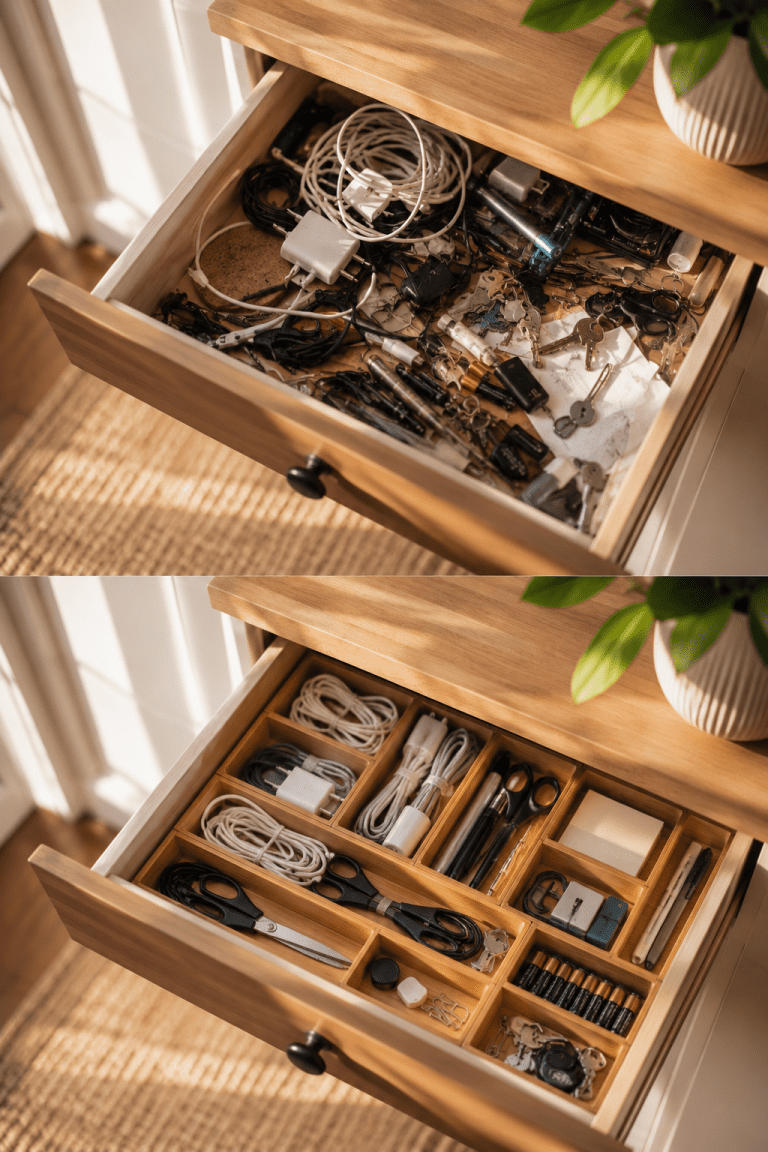
Bamboo Drawer Dividers
Adjustable, spring‑loaded, and beautiful. Perfect for kitchen, office, or bedroom drawers.
Glass Pantry Jars
Airtight bamboo lids, multiple sizes. Ideal for dry goods, snacks, and spices.
Seagrass Storage Baskets
Natural, woven, and stackable. Use them in the living room, bathroom, or bedroom.
6. Organize by Frequency of Use
Daily items (keys, phone charger, coffee supplies) belong at arm’s reach. Seasonal items (holiday decor, winter blankets) can go in high cabinets or under‑bed storage. This simple system reduces visual clutter and makes your home work for you.
7. Adopt the One‑In‑One‑Out Rule
For every new item that enters your home — a new pair of shoes, a kitchen gadget, a toy — one similar item must leave. This prevents accumulation and makes you more intentional about purchases.
8. Set Up a Minimalist Entryway System
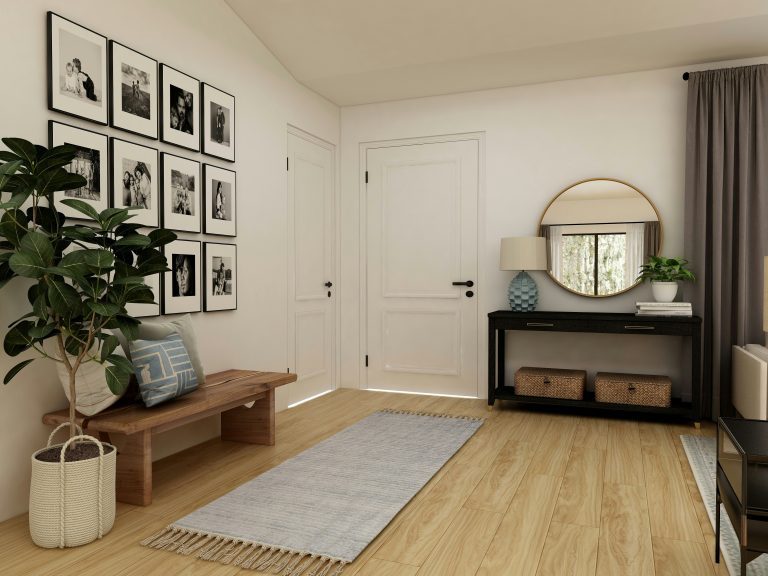
An organized entryway sets the tone for your entire home. A simple setup includes: hooks for bags and jackets, a small tray for keys and mail, and a shoe basket or rack. Everything has a designated spot, so clutter never piles up.
9. Build a Sustainable Pantry (Ditch the Plastic)
Decant dry goods into clear glass jars. Not only does this reduce plastic waste, but it also lets you see exactly what you have — preventing over‑buying and food waste. Label jars with a simple tag or chalk marker for a clean, cohesive look.
10. Establish a Weekly Reset Routine
Spend 15–20 minutes every Sunday resetting your home: return items to their places, clear countertops, and do a quick declutter sweep. This prevents small messes from becoming overwhelming. My Sunday Reset Routine walks you through the exact steps.
11–15: More Quick Sustainable Organization Strategies
11. Use multi‑purpose furniture. An ottoman with hidden storage or a coffee table with drawers reduces the need for extra storage bins.
12. Rotate seasonal items. Keep only the current season’s clothes and gear accessible. Store the rest in labeled, reusable bins.
13. Emotional decluttering. Let go of items that carry guilt or obligation. Keeping something because it was a gift or expensive doesn’t serve you.
14. DIY natural cleaners. Vinegar, baking soda, and essential oils are cheap, eco‑friendly, and reduce plastic bottle waste.
15. Label with intention. Use recycled paper tags or a simple label maker to identify bins and jars. Clear labels help everyone in the household maintain the system.
23 Small Apartment Storage Hacks Every Renter Needs to Save
Frequently Asked Questions
Free Sustainable Home Reset Checklist
Get the printable checklist with all 15 ideas, a room‑by‑room tracker, and a reusable shopping guide — just pop your email below.
Room‑by‑room tracker
Weekly sustainable tips
No spam, ever. Unsubscribe anytime. Your inbox deserves to be calm, too.
Start Small, Stay Consistent
Sustainable home organization isn’t about perfection. It’s about creating systems that reduce clutter, save money, and honor the planet — one small choice at a time. Pick one idea from this list today. Maybe it’s setting up a donation box, or replacing plastic bags with glass jars. Small changes compound into a calmer, more intentional home.