10 Decluttering Questions to Ask Yourself When You’re Stuck
10 Decluttering Questions to Ask Yourself When You’re Stuck
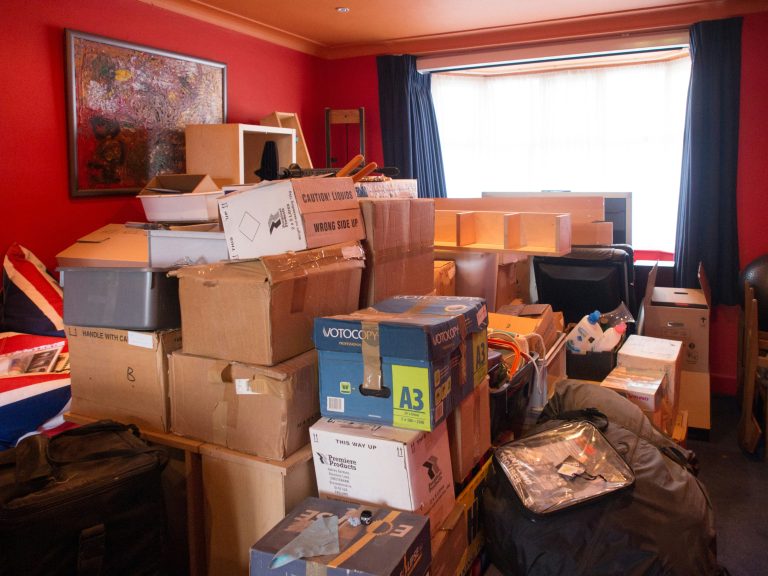
Walking into a home should feel like a deep breath, but for millions of busy women, it triggers an immediate mental checklist of unfinished chores and visual chaos. The modern homemaker is frequently left standing in the middle of a room, frozen by decision fatigue and a rising sense of domestic guilt. When every shelf and drawer demands attention, physical clutter ceases to be a simple cleaning issue and becomes a profound psychological burden.
To break this state of cognitive paralysis, a structured, diagnostic approach is required. By asking targeted questions grounded in behavioral psychology, a homeowner can strip the emotion from organizing decisions. This editorial guide explores the neurological link between home disorganization and chronic stress, and provides ten logical questions designed to clear physical spaces and restore mental clarity.
Key Takeaways
- Understand the Cortisol Connection: Chronic household clutter prevents women’s stress hormone levels from naturally declining throughout the day, contributing to low-grade anxiety.
- Deconstruct Sunk Costs: Keeping an unused item because it was expensive does not recover the lost money; it simply extracts a continuous tax on mental and physical space.
- Audit the “Fantasy Self”: Releasing items kept for an idealized version of life allows room to appreciate and manage one’s current, authentic reality.
- Utilize the 20/20 Rule: Eliminate low-value storage hoarding by letting go of items that can be easily replaced for less than $20 in under 20 minutes.
Disclosure: This resource contains affiliate links. If a purchase is made through these links, a small commission may be earned at no additional cost to the reader. As an Amazon Associate, this platform earns from qualifying purchases.
The Physiology of Domestic Clutter: Why Your Brain Feels Stiff
To understand why sorting through a closet feels physically exhausting, one must examine the physiological relationship between the human nervous system and the domestic environment. A landmark study conducted by researchers Darby Saxbe and Rena Repetti at the University of California, Los Angeles (UCLA) analyzed dual-income couples’ self-guided home tours. The study’s linguistic analysis revealed that women who described their homes using words associated with clutter or unfinished projects exhibited flat diurnal slopes of salivary cortisol.
In a healthy physiological pattern, cortisol peaks in the morning and tapers off as the day progresses. However, for those surrounded by household disarray, cortisol levels remained elevated, locking the body into a state of low-grade, perpetual fight-or-flight. Interestingly, the study noted that husbands did not exhibit the same hormonal response, reflecting a gendered psychological burden wherein women feel culturally responsible for the state of the domestic domain.
Furthermore, research from the Princeton University Neuroscience Institute demonstrates that multiple stimuli present in the visual field compete for neural representation by mutually suppressing their evoked activity throughout the visual cortex. This constant visual competition drains finite cognitive resources, depleting dopamine levels and triggering decision fatigue. When a homeowner feels “stuck,” it is a direct consequence of this system-wide cognitive overload.
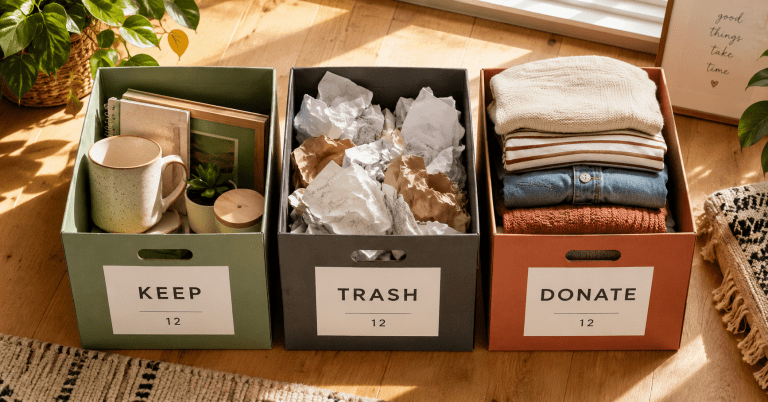
To overcome this fatigue, establishing structured physical boundaries is essential. Transitioning from visual noise to orderly storage can be initiated through small habits or larger structured challenges like the 30-day declutter challenge or the 12-12-12 declutter method. When these macro-strategies still leave the homeowner frozen, these ten strategic decluttering questions to ask yourself will dismantle the emotional blockages.
1. If this item vanished tomorrow, would there be an active search to replace it?
Most household items are kept not because they are loved or needed, but because they have settled into the background of a room. This is the “disappearance test.” If a fairy godmother waved her wand and removed a specific kitchen gadget or old pair of jeans overnight, would anyone in the household actively notice its absence, search the drawers for it, or feel compelled to purchase a replacement? If the answer is no, then the item is simply renting space in the home without providing any genuine utility.
For items that survive this test but lack a proper home, containing them in high-quality systems prevents them from sliding back into visual chaos. Standardizing drawer interiors with tools like the drawer organizer set I use ensures that only the essentials remain accessible.
Recommended Drawer Management System:
Using structural dividers inside kitchen or bedroom drawers immediately sets clear limits on how many items can be kept. This prevents the classic “junk drawer junk pile” from forming.
2. Would this item be purchased again today at its current retail price?
The endowment effect is a cognitive bias that causes humans to overvalue things simply because they already own them. By reversing the perspective, one can bypass this mental roadblock. If this item were encountered today in a store window, would hard-earned capital be spent to purchase it? If the answer is an immediate “no,” it indicates that the item does not align with the owner’s present aesthetic, body, or lifestyle needs. Letting it go aligns the home with who the homeowner is today, rather than who they were years ago.
3. Is this item being kept solely to avoid facing the guilt of a past financial mistake?
The sunk cost fallacy is a powerful mechanism of domestic paralysis. Many closets are filled with unworn designer garments, unread books, or unused fitness gear because discarding them feels like admitting to a waste of money. But the truth is simple: the money was spent the moment the item was purchased. Keeping it inside the home does not return those funds to a bank account; instead, it extracts a daily tax on physical living space and mental clarity. Releasing the item frees the homeowner from a constant, visual reminder of guilt.
4. Does this item belong to a “fantasy self” rather than the actual daily routine?
Every home contains artifacts of a “fantasy self”—an idealized version of who the homeowner wants to be or thinks they should be. This includes stacks of complex, unused French cooking molds, advanced sewing machines with unfinished projects from 2018, or heels too high to wear comfortably on a school run. It is important to ask: does this object serve the real, lived, daily schedule, or a daydream? Letting go of these aspirational burdens is a profound act of self-acceptance that makes room for genuine, low-stress routines.
| Domestic Category | The “Fantasy Self” Persona | The Sunk-Cost Fallacy Excuse | The Realistic, Lived Reality | Actionable Outcome |
|---|---|---|---|---|
| Aspirational Wardrobe | A socialite wearing restrictive garments | “But it still has the retail price tags attached!” | Preference for structured, breathable athleisure | Donate to an organization supporting working women |
| Specialized Kitchenware | An artisan baker or high-end pastry chef | “It cost over $100 and might be useful someday.” | A fast, simple family dinner routine | Sell or pass on to a dedicated hobbyist |
| Unfinished Crafts | A highly artistic, patient knitter | “I spent 15 hours on this initial draft!” | No current free time for intensive crafting projects | Recycle materials; forgive the unfinished task |
5. If a move across the country were required, would this item be packed, hauled, and unpacked?
Nothing provides organizing clarity quite like the financial and physical reality of moving house. Packing boxes, carrying heavy containers down flights of stairs, loading a truck, and paying for fuel forces an honest valuation of weight versus utility. If an item is not worth the raw physical labor of wrapping, boxing, and carrying it into a new life chapter, it should not occupy valuable real estate in the current home.
6. Is the physical real estate this item occupies more valuable than the utility it provides?
Every square foot of a home has a financial value, calculated through monthly rent or mortgage payments. When an unused item occupies shelves or closets, that space is essentially being rented to store dead weight. Is a dusty, rarely used appliance or old stack of magazines worth $50 of monthly household value? Clear physical boundaries and vertical storage systems, like those discussed in the guide on small apartment storage hacks, can prioritize spatial freedom over unused things.
Recommended Space-Saving Storage Containment:
Using stackable, heavy-duty clear storage totes protects seasonal items in attics or closets without eating up horizontal floor space. They help define the physical limits of what can be kept.
7. Can this item be replaced in less than 20 minutes for under 20 dollars?
The “20/20 Rule” is a highly effective logical filter to dismantle “just-in-case” hoarding. Often, random items like extra plastic containers, old charging cables, or secondary measuring cups are kept because of a vague, future scenario. If the item can be easily replaced at a local shop or online retailer for under $20 in under 20 minutes, the mental burden of storing it for years far outweighs the minor financial cost of replacing it in the rare event it is actually needed.
8. Is this item kept out of obligation because it was a well-meaning gift?
A gift’s primary purpose is to express love, care, and connection. That purpose is completely fulfilled the moment the gift is exchanged. The giver did not intend to curse the recipient with a lifetime of guilt, stress, and physical clutter. Storing an unwanted, unliked item out of obligation turns a living space into a monument to guilt. It is okay to pass the item along to a home where it can be genuinely appreciated.
9. Is the effort required to clean, maintain, and store this item worth the utility it provides?
Possessions are not passive; they demand time, energy, and maintenance. Every object must be dusted, laundered, repaired, organized, or moved to clean around it. If an item costs more in physical and mental labor to maintain than it provides in utility, it is a bad investment. Reducing these high-maintenance possessions is essential to successfully running a Sunday reset routine without burning out.
Recommended Protective Storage Containment:
Using breathable, zipper-sealed fabric storage bags under beds or on high shelves keeps off-season linens, bedding, and clothes pristine and dust-free, reducing cleaning maintenance.
10. If a highly unsanitary substance soiled this item, would there be an immediate effort to clean it, or would it be discarded with relief?
This is the ultimate test of true value. If an accident from a pet or child completely soiled the item under consideration, would the homeowner immediately wash it with care, or would they use the incident as a convenient excuse to throw it in the trash with a sigh of relief? If the thought of throwing it away brings relief, the decision has already been made. Discard it now, clean and guilt-free.
Recommended Damage-Free Organizing Tool:
For those items that survive these logical filters but lack a dedicated storage spot, using heavy-duty adhesive wall hooks can get them off floor surfaces and into a clean visual home.
A Final Thought on Restoring Domestic Calm
Asking these ten questions interrupts the automatic behavior patterns of saving and hoarding. When the brain begins to view the home as an intentional, curated space rather than a storage unit, stress levels decrease, sleep patterns improve, and focus returns. The goal is not pristine perfection; the goal is mental breathing room.
Download the Free Renter’s Space-Saving Checklist
Struggling with narrow closets and lease restrictions? Enter your email address below to receive a curated checklist designed to maximize storage in tight spaces without losing your security deposit.
Frequently Asked Questions
How does visual clutter actively affect mental health in women?
Scientific research shows that women are highly sensitive to visual clutter. It triggers the chronic release of the stress hormone cortisol, causing cognitive load and decision fatigue. Over time, an unorganized home environment can lead to feelings of exhaustion, low mood, and anxiety, as the brain perceives the unfinished space as a constant, nagging task.
What is the 20/20 rule of decluttering?
The 20/20 rule states that if you are holding onto an item “just in case,” you can safely let it go if it can be replaced for less than 20 dollars and in less than 20 minutes from your current location. This helps eliminate low-value physical items that accumulate under the guise of future utility.
How can I let go of items without feeling guilty about wasting money?
To overcome this financial guilt, realize that the money was spent the moment the item was bought. Keeping the item in your home does not bring the money back; it only forces you to pay a “storage tax” in the form of mental stress and lost space. Letting the item go to someone who can use it helps restore value to the purchase.
What is the first area I should start decluttering when completely overwhelmed?
When experiencing extreme overwhelm, start in high-frequency, highly visible transit zones such as the entryway or your bedside table. Clearing these entry points provides immediate visual relief and neural restorative space when you return home or prepare for sleep, helping build momentum for larger spaces.
How do I deal with sentimental items like children’s baby clothes or family heirlooms?
For sentimental items, establish a physical boundary, such as a single “keepsake container.” You are allowed to keep whatever fits comfortably inside that container. This forces you to curate only the most meaningful memories (such as a single favorite outfit rather than bags of unused baby clothes) while honoring the space of your current home.